Thank you! Your submission has been received
Affordable Home Wind Turbines
The Best Wind Turbines for Your Home
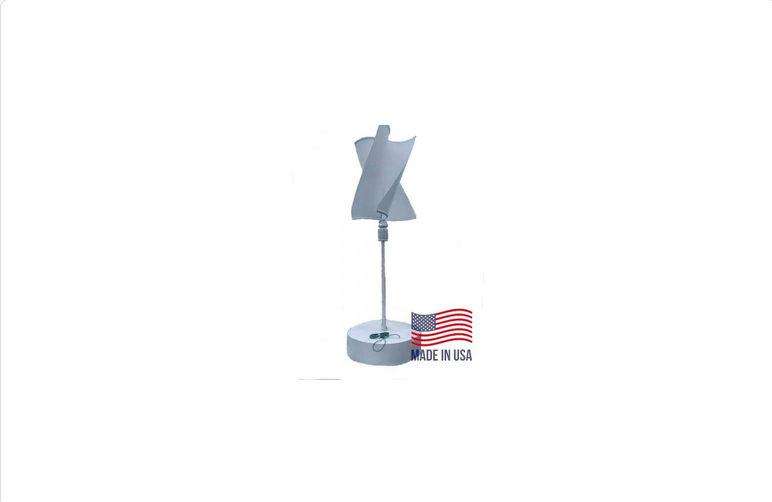
Affordable Home Wind Turbines is a Corpus Christi based company that provides affordable and quality home wind turbines to the residential market. We offer a variety of turbines to choose from, so you can find the perfect one for your needs. Our turbines are easy to install and maintain, and they can save you money on your energy bill
Testimonials
Affordable Wind Turbines Capturing Clean, Affordable Wind Energy with Power …
U.S. Wind Industry Federal Incentives, Funding, and Partnership Opportunities
U.S. Wind Industry Federal Incentives, Funding, and Partnership Opportunities Fact Sheet
Wind power is a burgeoning power source in the U.S. electricity portfolio, supplying over 10% of U.S. electricity generation.
The U.S. Department of Energy’s (DOE’s) Wind Energy Technologies Office (WETO) focuses on enabling industry growth and U.S. competitiveness by supporting early-stage research on technologies that enhance energy affordability, reliability, and resilience and strengthen U.S. energy security, economic growth, and environmental quality. Outlined below are the primary federal incentives for developing and investing in wind power, resources for funding wind power, and opportunities to partner with DOE and other federal agencies on efforts to move the U.S. wind industry forward.
Wind Energy Funding Opportunities
Funding for wind projects may be available through other offices in the U.S. Department of Energy or other federal agencies. Financial opportunities not related to the Wind Energy Technologies Office are listed below.
For more information about federal incentives for developing and investing in wind power, resources for funding wind power, and opportunities to partner with DOE and other federal agencies, see the U.S. Wind Industry Federal Incentives, Funding, and Partnership Opportunities fact sheet.
For the many federal resources available to support offshore wind deployment from DOE, the Department of the Interior, the Department of Commerce, and the Department of Transportation, see the Advancing the Growth of the U.S. Offshore Wind Industry: Federal Funding and Incentives
fact sheet. These resources include tax programs, grants and funding opportunities, and federal financing programs.
Tax Incentives
The federal government currently offers several tax incentives for wind projects. The Department of the Treasury's Internal Revenue Service (IRS) administers these incentives.
Businesses that begin construction on wind energy systems by December 31, 2024 are eligible for either the federal Business Energy Investment Tax Credit
(ITC), tied to the total value of the facility, or the federal Renewable Electricity Production Tax Credit
(PTC), tied to the energy produced over a ten-year period. Starting in 2025, these tax credits are replaced with emissions-based, technology-neutral tax credits available to all types of power facilities with zero or net-negative carbon emissions. It will begin phasing out either in 2032 or when total greenhouse gas emissions in the power sector decline to at least 75% below 2022 levels—whichever comes last.
Residential taxpayers who install small wind energy systems (turbines 100 kilowatts or smaller) by December 31, 2034 are eligible for the federal residential renewable energy ITC.
The specific value of wind tax credits is dependent on whether a system is considered large or small, when the system is built, and other factors. For more information, see the U.S. Wind Industry Federal Incentives, Funding, and Partnership Opportunities fact sheet.
Other Financial Opportunities from DOE
The EERE Funding Opportunities Web page provides links to useful resources about financing and incentives for energy efficiency and renewable energy projects for the home, business, industry, utilities, and government.
DOE awards funding to small businesses for renewable energy research and development (R&D) projects through its Small Business Innovation Research (SBIR) and Small Business Technology Transfer (STTR) programs. Visit DOE's Small Business Innovation Research and Small Business Technology Transfer website to apply for grants.
DOE's Advanced Research Projects Agency-Energy (ARPA-E) sponsors R&D grants for earlier-stage, high-potential, high-impact energy technologies. Visit ARPA-E's website for more information on grant opportunities or to apply.
Under the Title XVII Innovative Energy Loan Guarantee Program, DOE's Loan Programs Office (LPO) finances large-scale renewable energy and efficient energy projects, including $1.69 billion in loan guarantees to four commercial-scale wind projects. With $4.5 billion in lending authority under its Renewable Energy and Efficient Energy Projects solicitation, LPO is ready to support innovative energy projects that are catalytic, replicable, and market ready. For more information, visit the LPO website.
In addition, DOE's Tribal Energy Program provides financial and technical assistance, education and training to tribes for the evaluation and development of renewable energy resources on tribal lands.
If you are interested in applying for funding, but your project does not fit within the scope of the posted solicitations, funding opportunities, or past opportunities, please submit your proposal to DOE's Unsolicited Proposal Office
.
For additional information on other funding opportunities such as bonds and Rural Energy for America loans and grants, as well as opportunities to partner with national laboratories, see our fact sheet.
Small Wind Turbines (Residential) Tax Credit
The following Residential Clean Energy Tax Credit amounts apply for the prescribed periods:
30 % for property placed in service after December 31, 2016, and before January 1, 2020
26% for property placed in service after December 31, 2019, and before January 1, 2022
30% for property placed in service after December 31, 2021, and before January 1, 2033
26% for property placed in service after December 31, 2032, and before January 1, 2034
22% for property placed in service after December 31, 2033, and before January 1, 2035
Claim the credits using the IRS Form 5695.
Instructions for Form 5695 (Print Version - PDF)
What products are eligible?
A wind turbine collets kinetic energy from the wind and converts it to electricity that is compatible with a home's electrical system.
A qualified small wind energy property uses a wind turbine to generate electricity for use in connection with a home in the United States and used as a residence by the taxpayer.
Tax credits includes installation costs.
At ENERGY STAR
Your go-to resource for the latest advice from ENERGY STAR experts on saving energy at home and work.
ENERGY STAR Home Upgrade
6 high impact improvements to save you thousands.
Who can use this credit?
Existing homes and new construction qualify. Both principal residences and second homes qualify. Rentals do not qualify. This system must be installed in connection with a dwelling unit located in the United States and used as a residence by the taxpayer. The home served by this system does not have to be the taxpayer's principal residence. A principal residence is the home where you live most of the time. The home must be in the United States. It can include a house, houseboat, mobile home, cooperative apartment, condominium, and a manufactured home.
Newly Updated Fact Sheet on Federal Incentives, Funding, and Partnership Opportunities for U.S. Wind Is Available
Newly Updated Fact Sheet on Federal Incentives, Funding, and Partnership Opportunities for U.S. Wind Is Available
WETO has updated its U.S. Wind Industry Federal Incentives, Funding, and Partnership Opportunities fact sheet that outlines federal incentives for developing and investing in wind power, now including new guidance
from the U.S. Treasury Department and Internal Revenue Service about the bonus under the Inflation Reduction Act for clean energy projects and facilities located in communities that have driven and historically been at the forefront of energy production.
Wind Energy Financial Incentives
Financing incentives can impact overall project economics and are an integral part of the successful implementation of distributed and utility-scale wind energy. As with all energy projects, federal, state, local, and utility financial incentives are also available for wind projects.
The Database of State Incentives for Renewables and Efficiency (DSIRE) is a comprehensive source of information on incentives that promote renewable energy and energy efficiency. Interested parties can search by Zip code to learn about programs in their area. The following provides an overview of the main federal incentives for wind energy projects.
The federal government uses subsidies and incentives to stimulate deployment for all energy technologies. These subsidies can include:
Federal programs that provide direct cash outlays to producers or consumers of energy
Tax expenditures that reduce the tax liability of firms or individuals who take specified actions that affect energy production, distribution, transmission, consumption, or conservation
Energy research and development (R&D) activities aimed at increasing U.S. energy supplies or improving production and end-use technologies
Support for federal and rural utilities
Loans and loan guarantees that provide financial support for energy technologies by guaranteeing the repayment of loans obtained in the private debt market or by lending money directly to energy market participants.
The following is a breakdown of current and past federal incentives for wind energy, including an update on the Production Tax Credit (PTC).
Production Tax Credits and Investment Tax Credits
Federal, state, and local regulations govern many aspects of wind energy development. The nature of the project and its location will largely drive the levels of regulation required. Check the database of federal and state renewable energy policies and incentives.
Originally enacted in the Energy Policy Act of 1992, the PTC is a production-based tax credit available to various renewable energy sources, implemented to level the playing field based on the incentives provided to other energy sources. The Investment Tax Credit (ITC) provides a credit for investment costs at the start of a project.
In August 2022, Congress passed the Inflation Reduction Act (IRA), which extends the Production Tax Credit (PTC) and the Investment Tax Credit (ITC) for wind projects through 2024. Additionally, the IRA adds increased credit amounts and bonus tax incentives to the PTC and ITC for projects that meet specified requirements. In 2025, the standing PTC and ITC will be converted to technology-neutral versions, which will begin phasing out in 2032, or when total power sector greenhouse gas emissions decline to at least 75% below 2022 levels, whichever comes last. Learn more about available tax credits.
To learn about primary federal incentives for developing and investing in wind power, resources for funding wind power, and opportunities to partner with the U.S. Department of Energy and other federal agencies on efforts to move the U.S. wind industry forward, see Advancing the Growth of the U.S. Wind Industry: Federal Incentives, Funding, and Partnership Opportunities.
Recovery Act
The American Recovery and Reinvestment Act of 2009, known as ARRA or the Recovery Act, allowed wind projects to take the ITC in lieu of the PTC. ARRA also created the Section 1603 Treasury grant, a temporary program that enabled specified energy property built by the end of 2012—including wind projects—to receive a cash grant of 30% of a project’s capital costs in lieu of either the PTC or ITC.
Given the challenges in securing tax equity during the financial crisis, Section 1603 has been credited with supporting the continued growth of the renewable energy sector during what was otherwise a challenging investment environment. The program also reduced barriers for newer and less-experienced wind developers, who might otherwise have faced sizable challenges in accessing the limited supply of tax equity.
ARRA also created the Section 1705 Loan Program for commercial projects, which closed on four loan guarantees to wind projects totaling more than 1,000 megawatts.
Accelerated Depreciation
Accelerated depreciation through the federal Modified Accelerated Cost-Recovery System (MACRS) allows wind project owners to depreciate most project capital costs on a 5-year schedule. The Economic Stimulus Act of 2008 and subsequent legislation provided a further 50% first-year bonus depreciation provision for projects built between 2008 and 2010. The American Taxpayer Relief Act of 2012 extended a 50%, first-year bonus depreciation to projects placed in service through December 31, 2013.
Rural Energy for America Program
The U.S. Department of Agriculture provides farmers and ranchers with loan guarantees and grants for renewable energy development assistance through its Rural Energy for America Program (REAP). Entities such as state, local, and tribal governments; educational institutions; and rural electric cooperatives are also eligible for REAP incentives.
More Information
Learn more about economic incentives.
Publications
https://www.reddit.com/user/Pluggedwind/comments/12vohw0/plugged_wind_turbines/
https://www.reddit.com/user/Pluggedwind/submitted/
https://www.facebook.com/pluggedwind/posts/133995646316378/
https://www.pinterest.com/pluggedwind/
https://www.tiktok.com/@pluggedwind
https://8importantthingstoknowabouthomewindturbines.weebly.com/
https://affordablewindturbineshome.weebly.com/plugged-wind.html
https://affordablewindturbines1.weebly.com/
https://homewindturbines-windgenerators-thehomedepot.weebly.com/
https://images.app.goo.gl/NTaSVVNQfMRDE6Qj7
https://images.app.goo.gl/fYXhr1WM76gtdVqJ7
https://images.app.goo.gl/usLApjAwz4UYW97V7
https://www.youtube.com/@PluggedWind/xregexp
https://www.youtube.com/watch?v=PiytiUuWOSU
Contact us for Affordable Wind Turbines
Contact us to learn more about our affordable home wind turbines and how we can help you lower your energy bills